
Enterprise finance teams have more automation tools than ever, yet many critical workflows are still fragmented. RPA scripts break when an interface changes, and approvals still move through spreadsheets. That leaves manual bottlenecks, gaps in the audit trail, and risk nobody can see. AI agent orchestration takes a different approach: several agents working together that can reason across tools, deal with exceptions, and run complex financial operations with little human intervention. Without a structured governance layer, though, that autonomy turns into a liability. This guide lays out a risk-adjusted plan for scaling agentic workflows in finance, from the first deployment to mature operations that correct themselves. If you are building a future-proof business strategy, agent orchestration belongs in it.
Table of Contents
Open Table of Contents
- What Is AI Agent Orchestration?
- Linear Automation vs. Agentic Orchestration
- How AI Agent Orchestration Works
- The Autonomous Finance Orchestration (AFO) Framework
- Stage-Based Guidance
- Use-Case Scenarios in Enterprise Finance
- Risks, Constraints, and Trade-Offs
- Execution Checklist: Deploying Agent Orchestration
- Conclusion
What Is AI Agent Orchestration?
AI agent orchestration is the coordination of several autonomous AI agents, each specialized in one task, inside a single workflow. Orchestrated agents, unlike single-purpose bots, share context, hand off sub-tasks, and change course based on results as they come in. In enterprise finance, one agent might pull transaction data, another check it against compliance rules, and a third start settlement, while a meta-agent watches for anomalies and reroutes work when an exception comes up.
Definition: AI agent orchestration is the dynamic coordination of specialized autonomous agents that share context, delegate tasks, and adapt execution paths to automate complex, multi-step financial workflows.
Compared with static automation, these systems can reason, plan, and correct their own mistakes. That fits the goals of strategic workflow automation, but it also asks more of your governance.
Linear Automation vs. Agentic Orchestration
Traditional automation follows a fixed, rule-based path: if X, then Y. That works for predictable, high-volume tasks. Finance operations, however, are full of exceptions, judgment calls, and dependencies between systems. Agentic orchestration uses a graph-based execution model instead, where agents negotiate, branch, and loop until they reach the goal.
The table compares the two approaches.
| Dimension | Linear Automation | Agentic Orchestration |
|---|---|---|
| Execution path | Fixed sequence | Dynamic, goal-directed |
| Exception handling | Manual intervention required | Agents reroute or escalate |
| Scalability | Horizontal replication only | Horizontal + vertical reasoning |
| Governance complexity | Low (rules are visible) | High (behavior emerges from interaction) |
| Initial setup cost | Low | Moderate to high |
| Time to ROI | Weeks | 3–6 months for full maturity |
| Learning capability | None | Agents improve via feedback loops |
| Integration depth | Single-system connectors | Multi-system, event-driven graphs |
The governance complexity row is the one to watch. It means orchestration has to be planned and owned like any other strategic capability. Our enterprise AI governance foundations guide covers the compliance structures you will need.
How AI Agent Orchestration Works
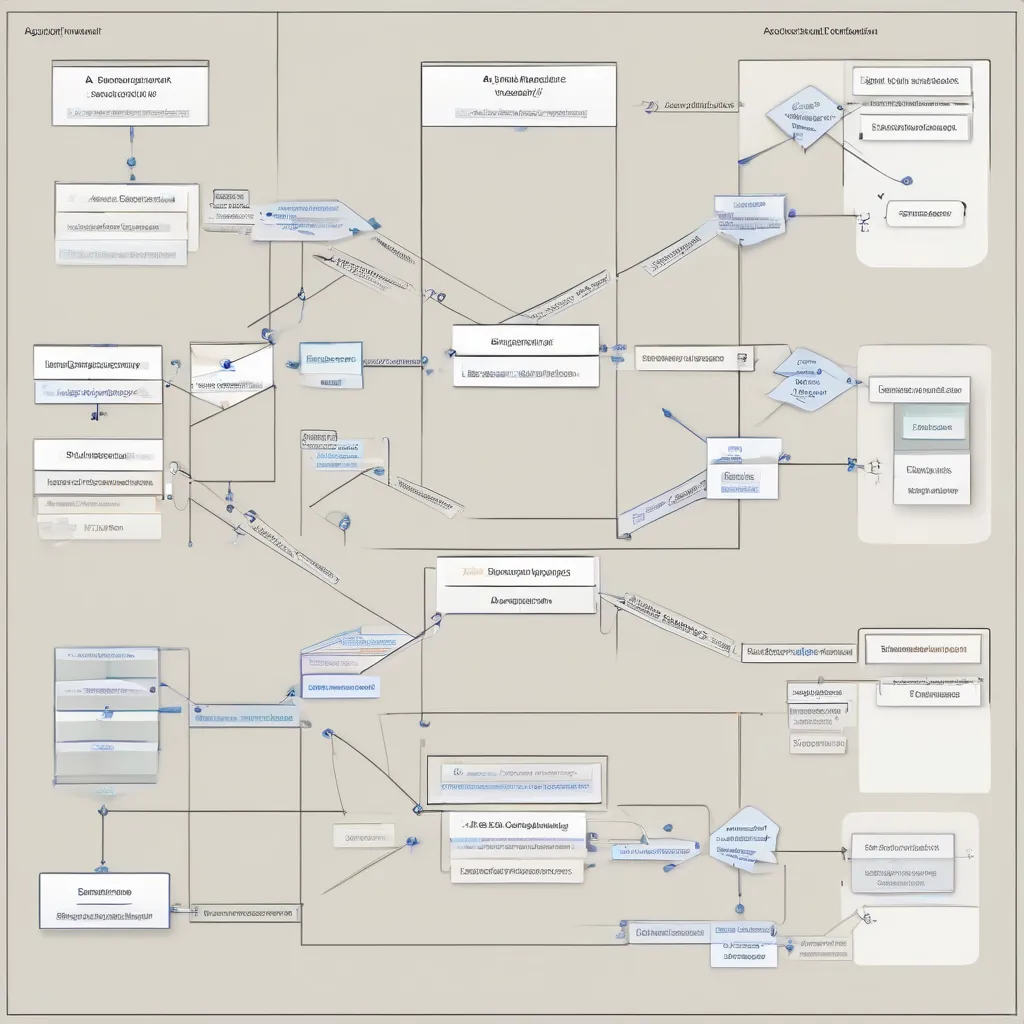
A typical orchestrated finance workflow has four connected parts.
- Specialist Agents: Each agent handles one narrow job, such as invoice processing, reconciliation, compliance checks, or payment execution, and exposes it through structured APIs or tool-use functions.
- Orchestrator (Meta-Agent): The central planner takes a high-level goal (e.g., “close the monthly books”), breaks it into sub-tasks, assigns them to specialists, and puts the dependencies in order.
- Shared Memory & Context Store: Agents work from a common state layer that holds transaction records, audit trails, and decision logs, so no agent reasons in a silo or from stale data.
- Guardrails & Observability Layer: Hard-coded rules and learned policies stop any action that breaks a threshold and flag it for human review before it runs.
This architecture is the basis for what we call the Autonomous Finance Orchestration (AFO) Framework, described below.
The Autonomous Finance Orchestration (AFO) Framework
The AFO Framework is a proprietary maturity model. It describes how enterprise finance operations move from manual coordination to fully autonomous workflows that optimize themselves, in four layers that have to mature in order.
| Layer | Function | Maturity Indicator |
|---|---|---|
| Observation | Data ingestion, anomaly detection, pattern recognition | Agents monitor all relevant systems without gaps |
| Decision | Reasoning, planning, tool selection, trade-off analysis | Agents choose optimal paths based on risk-adjusted return |
| Execution | Transaction processing, report generation, system updates | Actions occur within approved guardrails autonomously |
| Governance | Audit, compliance enforcement, human-in-the-loop escalation | Continuous oversight with explainable decision logs |
The layers mature in order, but they also feed each other. A mature Observation layer leads to better Decisions, which cut Execution errors, which in turn give Governance cleaner data. Our enterprise financial risk resilience guide goes further into building oversight that holds up.
Stage-Based Guidance
Scaling agent orchestration means matching the AFO layers to how ready the organization is. The stages below are meant to stop a common mistake: skipping governance to move faster.
Early Stage: Reactive Coordination
Early-stage organizations have fragmented tools and a lot of manual touchpoints. The aim here is to connect agents for observation and simple decision support, with no autonomous execution yet.
- Deploy observation agents that aggregate data from ERP, CRM, and banking APIs.
- Use rule-based orchestrators to route exceptions to human operators.
- Establish baseline audit logging for every agent action.
- Metric to track: Reduction in manual data aggregation hours (target: 30–50%).
Growth Stage: Coordinated Autonomy
At this stage, agents run predefined workflows on their own within risk thresholds, and the orchestrator handles branching logic and multi-step approvals.
- Enable execution agents for low-risk transactions (e.g., routine reconciliations, standard invoice matching).
- Introduce a dedicated governance agent that reviews decision logs daily.
- Implement feedback loops where execution outcomes refine decision models.
- Metric to track: Autonomous task completion rate (target: 70–85%).
Scale Stage: Adaptive Intelligence
Mature organizations add predictive observation agents and multi-agent negotiation. Execution is fully autonomous on high-confidence paths, and governance keeps being tuned.
- Agents predict cash flow needs and pre-position liquidity.
- Multi-agent negotiation handles complex trade settlements or M&A data rooms.
- The governance layer uses AI to spot drift in agent behavior and correct it automatically.
- Metric to track: End-to-end financial close cycle time reduction (target: 60–80%).
Use-Case Scenarios in Enterprise Finance
Three areas of enterprise finance show measurable results from agent orchestration.
1. Accounts Payable Automation
Orchestrated agents handle invoice ingestion, three-way matching, exception routing, and payment scheduling. The observation agent flags duplicate invoices; the decision agent prioritizes early-payment discounts based on cash flow forecasts; the execution agent initiates payments within approved limits. Our guide on supply chain finance strategic advantage covers the same principles; here they apply to internal AP workflows.
2. Fraud Detection and Response
A real-time orchestration graph connects transaction monitoring, behavioral analytics, and case management. When the observation agent detects an anomaly, the decision agent evaluates risk scores and picks an action: block, flag for review, or ask for more verification. The execution agent then enforces the decision and updates the audit trail. It is the same idea as proactive cyber threat intelligence, adapted for financial data.
3. Treasury Liquidity Management
Agents monitor bank balances, forecast shortfalls, and automatically execute inter-company transfers or draw on credit facilities within pre-approved limits. The decision agent weighs opportunity cost against liquidity risk, and the governance agent checks that every transfer complies with internal policies and external regulations. Investment portfolio optimization strategies depend on this kind of real-time cash visibility.
Risks, Constraints, and Trade-Offs
Autonomous finance operations carry risks that traditional automation does not. Work through these before you scale.
- Over-delegation: Giving agents execution rights before the guardrails are proven can lead to unauthorized transactions or compliance breaches. Start with observation and recommendation-only modes.
- Black-box decisions: When the orchestrator’s decisions come out of complex agent interactions, explainability drops, and regulators and auditors require traceable decision logs. Budget for observability tooling from day one.
- Data lineage neglect: Agents that pull from several sources can spread stale or conflicting data, so you need a centralized context store with versioning. Our cloud data governance best practices guide has implementation patterns.
- Governance theater: A governance layer that only reviews logs after the fact, and never stops a risky action as it happens, undermines the whole framework.
- Vendor lock-in: Proprietary orchestration platforms can make it hard to switch. Favor open standards and API-first design, and use our SaaS security best practices enterprise guide to evaluate vendor controls.

Execution Checklist: Deploying Agent Orchestration
A structured deployment lowers the failure rate. Work through these checklists with your team.
Pre-Deployment Audit
- Map all target workflows and identify exception rates.
- Define risk thresholds for autonomous vs. human-in-the-loop execution.
- Select orchestration platform based on multi-agent support, auditability, and enterprise security.
- Establish data lineage and context store requirements.
- Draft governance operating model with clear escalation paths.
- Conduct a threat model specific to agent-to-agent communication.
- Secure stakeholder sign-off from finance, legal, and IT.
Ongoing Governance Checklist
- Review agent decision logs weekly for drift or anomalies.
- Update compliance rule engines when regulations change.
- Measure autonomous task completion rate and exception escalation rate monthly.
- Conduct quarterly red-team exercises on agent interaction paths.
- Refresh training data for observation agents to prevent model decay.
- Audit third-party tool integrations for data freshness and access controls.
Success Metrics Dashboard
| Metric | Target (Growth Stage) | Target (Scale Stage) |
|---|---|---|
| Autonomous task completion rate | 70–85% | 90–95% |
| Exception escalation rate | < 5% | < 2% |
| Month-end close cycle time | -20% vs. baseline | -50% vs. baseline |
| Audit finding resolution time | < 48 hours | < 12 hours |
| Agent-driven cost savings | 15–25% of process cost | 30–50% of process cost |
Conclusion
AI agent orchestration changes how finance operations are built, so it needs deliberate sequencing, strong governance, and continuous oversight. With the AFO Framework, enterprises can move from fragmented automation to coherent, adaptive financial operations and gain efficiency without giving up control. In our view, the organizations that do well will treat orchestration as a strategic capability within their broader enterprise AI strategy. For finance leaders evaluating autonomous tools, the open question is how to orchestrate responsibly at scale.
This article is general information, not financial, investment, tax or legal advice. Your situation is your own, so check with a qualified professional before you act on it. See our disclaimer.