
For most small business owners, the daily focus is on customers, products, and revenue. But beneath the surface of operations lies a powerful, often-neglected asset that can dictate the pace and ceiling of your growth: your business credit.
Relying solely on your personal credit score to fund your venture is a common but limiting strategy. It ties your company’s financial health directly to your own, puts your personal assets at risk, and often results in less favorable financing terms.
Building a distinct and robust business credit profile is the definitive step toward creating a truly separate, resilient, and fundable enterprise. This guide moves beyond basic checklists to provide a strategic framework for establishing, growing, and leveraging your business credit to unlock better funding, stronger partnerships, and sustainable growth. Effective strategic financial planning for business growth must include a dedicated effort toward building this crucial asset.
Table of Contents
Open Table of Contents
- Why Business Credit is a Strategic Asset, Not Just a Score
- The Business Credit Flywheel: A Framework for Growth
- Phase 1: Building the Bedrock of Your Business Credit
- Phase 2: How to Strategically Open Your First Tradelines
- Phase 3: Accelerating Your Score with Financial Accounts
- Phase 4: Leveraging Strong Credit for Maximum Growth
- Common Mistakes in Business Credit Building (And How to Avoid Them)
- Your Strategic Action Plan
- Conclusion: From Liability to Asset
Why Business Credit is a Strategic Asset, Not Just a Score
Before diving into the “how,” it’s critical to understand the “why.” Viewing business credit building as a compliance task misses the point entirely. It’s a strategic initiative with tangible impacts on your company’s valuation, resilience, and opportunities.
- The Separation Principle: A strong business credit profile is the financial firewall between you and your company. It allows the business to secure financing on its own merits, protecting your personal assets (like your home and savings) from business liabilities.
- The Credibility Signal: Lenders, suppliers, insurers, and even potential corporate partners check business credit reports. A high score signals financial responsibility and operational stability, making you a more attractive and lower-risk partner.
- The Capital Multiplier: Good business credit directly translates to better financial terms. This means access to larger loan amounts, lower interest rates, and higher credit limits, effectively multiplying the power of your available capital. This is fundamental to securing strategic small business loans for growth.
- Improved Cash Flow: With a strong credit history, you can negotiate more favorable payment terms with suppliers (e.g., Net 60 or Net 90 instead of Net 30), giving you more flexibility and improving your operational cash flow.
Ultimately, a business with its own credit identity is more valuable and durable. It’s an entity that can stand on its own, a key factor in any long-term growth or exit strategy.
The Business Credit Flywheel: A Framework for Growth
Building business credit isn’t a linear checklist; it’s a self-reinforcing cycle. We call this the Business Credit Flywheel. Each step builds momentum for the next, creating a virtuous cycle of credibility and access to capital.
- Foundation (Establish Your Entity): You create a legitimate, verifiable business identity separate from yourself.
- Initial Traction (Generate Credit Data): You open accounts with vendors who report your payment history to credit bureaus, creating your first data points.
- Acceleration (Leverage Early History): You use this initial history to qualify for financial products like credit cards and small loans, diversifying your credit profile.
- Compounding (Unlock Favorable Capital): Your established, positive credit history allows you to access better terms, larger lines of credit, and more sophisticated financing, which further strengthens your profile.
Understanding this cycle helps you see how small, consistent actions create significant long-term advantages.
Phase 1: Building the Bedrock of Your Business Credit
You cannot build credit for an entity that doesn’t formally exist in the eyes of lenders and government agencies. This foundational phase is non-negotiable.
Actionable Checklist:
- Form a Legal Entity: Register your business as a Limited Liability Company (LLC) or a Corporation (S-Corp or C-Corp). A sole proprietorship or general partnership typically doesn’t separate your business and personal credit.
- Obtain an Employer Identification Number (EIN): This is like a Social Security Number for your business. You can get one for free from the IRS website. It’s required for opening bank accounts and filing taxes.
- Open a Dedicated Business Bank Account: All business income and expenses must flow through this account. Co-mingling funds is a major red flag and can erase the legal liability protection your LLC or corporation provides.
- Establish a Business Address and Phone Number: Use a physical address (not a P.O. Box) and a dedicated business phone line. This adds a layer of legitimacy and is often required for credit applications.
- Register for a D-U-N-S Number: This is a unique nine-digit identifier for businesses, issued by Dun & Bradstreet (D&B). It’s free to get and is a prerequisite for creating a D&B credit file, which is one of the most important business credit reports.
Completing these steps tells the financial world that your business is a serious, distinct entity ready to take on financial responsibility.
Phase 2: How to Strategically Open Your First Tradelines
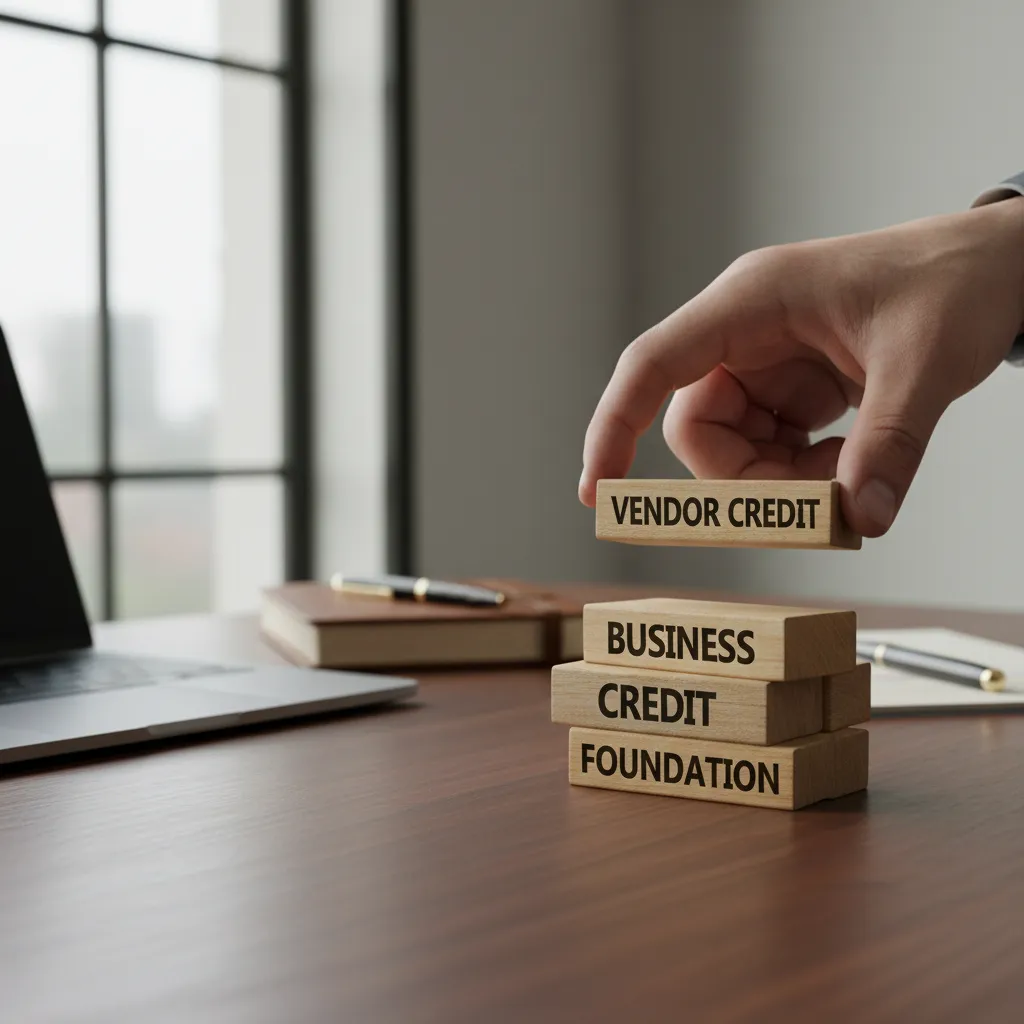
With your foundation in place, it’s time to generate your first credit data points. This is done by opening “tradelines,” which are credit accounts with other companies. The easiest place to start is with vendor credit, often called Net-30 accounts.
A Net-30 account allows you to purchase goods or services and pay the invoice within 30 days. This is a form of short-term financing.
The Golden Rule of Vendor Selection The single most important factor is choosing vendors who report your payment history to the major business credit bureaus (Dun & Bradstreet, Experian Business, Equifax Business). An account with a vendor who doesn’t report does nothing to build your credit file.
How to Find and Use Reporting Vendors:
- Identify Business Needs: Start by looking for suppliers for things you already need—office supplies, shipping materials, marketing services, or web hosting. Common starter vendors known to report include Uline, Grainger, Quill, and Crown Office Supplies.
- Verify Reporting: Before applying, confirm that the vendor reports to at least one, and preferably all three, major business credit bureaus.
- Start Small: Place a small initial order to activate the account. You don’t need to spend a lot; the goal is to establish a payment history.
- Pay Early, Not Just On Time: This is the most critical and often misunderstood part of the strategy. D&B’s PAYDEX® Score, a key metric, rates payment performance. A score of 80 means you pay on time. To get a top-tier score of 100, you must pay your invoices 20-30 days before the due date. Early payments are a powerful signal of financial health. Strong cash flow management strategies are essential to enable this practice.
Aim to open 3-5 of these accounts to establish a solid base of positive payment history. This is a core component of any effective SaaS vendor management strategy or any business that relies on suppliers.
Phase 3: Accelerating Your Score with Financial Accounts
Once you have a few vendor tradelines reporting positive history, you can move to the next level of business credit building: financial accounts.
Business Credit Cards
A business credit card is often the next logical step. For a new business, most cards will require a personal guarantee (PG), meaning you are personally liable if the business defaults. However, the account activity is reported to the business credit bureaus, building your company’s file.
Best Practices:
- Keep Utilization Low: Just like with personal credit, aim to use less than 30% of your available credit limit. High utilization can be a negative signal.
- Pay in Full: Pay the balance in full each month to avoid interest charges and demonstrate strong financial management.
- As your business credit strengthens, you may eventually qualify for corporate cards that do not require a personal guarantee. Explore our guide to the best business credit cards for small business to find options that fit your stage.
Monitoring Your Scores
You can’t improve what you don’t measure. Regularly monitoring your business credit reports is essential for tracking progress and catching errors.
| Credit Bureau | Key Score(s) | What It Measures |
|---|---|---|
| Dun & Bradstreet | PAYDEX® Score (1-100) | Payment history to vendors and suppliers. |
| Experian Business | Intelliscore Plus℠ (1-100) | A broad range of factors, including payment history, public records, and company demographics. |
| Equifax Business | Business Credit Risk Score™ (101-992) | Likelihood of severe delinquency or default. |
Understanding UCC Filings
As you apply for loans or equipment financing, you may see a “UCC filing” on your credit report. A Uniform Commercial Code filing is a public notice that a lender has a security interest in one or more of your business assets. While it indicates you have debt, it’s not inherently negative. It’s a normal part of business financing and shows other lenders that you have successfully secured capital.
Phase 4: Leveraging Strong Credit for Maximum Growth

This is where your hard work pays off. A strong, established business credit profile is a powerful tool for strategic growth.
- Negotiate Better Supplier Terms: Approach your key vendors and use your excellent payment history to request better terms, such as moving from Net-30 to Net-60. This can significantly improve your cash flow.
- Access Better Financing: You will qualify for more traditional financing products like bank loans and lines of credit with lower interest rates and more favorable repayment schedules.
- Lower Insurance Premiums: Insurers use business credit scores as a factor in determining premiums. A better score can lead to direct cost savings.
- Streamline Equipment & Vehicle Leasing: Strong business credit makes it easier and cheaper to lease the essential equipment you need to scale your operations.
- Strengthen Partnerships: When seeking partnerships or even considering a future acquisition, a clean and robust credit file is a sign of a well-run, low-risk company. This is a critical part of managing your strategic business debt for growth.
Common Mistakes in Business Credit Building (And How to Avoid Them)
The path to strong business credit has several common pitfalls. Avoiding them is just as important as taking the right steps.
- Mistake 1: Co-mingling Business and Personal Funds: This is the cardinal sin. It pierces the “corporate veil,” potentially making you personally liable for business debts and confuses your financial records. Always use your business bank account and credit card for business expenses only.
- Mistake 2: Assuming All Vendors Report: You can have dozens of vendor accounts, but if none of them report to the credit bureaus, you are making zero progress. Always verify reporting before opening an account.
- Mistake 3: Paying “On Time” Instead of Early: As noted, the highest scores from D&B are reserved for businesses that pay their bills well before the due date. “On time” is good, but “early” is excellent.
- Mistake 4: Ignoring Your Reports: Errors on business credit reports are common. If you don’t monitor your files, you won’t be able to dispute inaccuracies that could be dragging down your score.
- Mistake 5: Applying for Too Much Credit at Once: Each application for credit can trigger a hard inquiry. A flurry of inquiries in a short period can be a red flag for lenders, suggesting financial distress. Apply for new credit strategically and only when needed.
Your Strategic Action Plan
Building business credit is a marathon, not a sprint. Tailor your approach to your company’s current stage.
For Startups (0-12 months):
- Focus: Foundation & Initial Traction phases.
- Goal: Establish your legal entity correctly and open at least 5 tradelines with vendors who report to the major credit bureaus.
- Key Metric: Number of reporting tradelines.
For Growing Businesses (1-3 years):
- Focus: Acceleration phase.
- Goal: Secure a business credit card, maintain low utilization, and begin monitoring your credit scores quarterly.
- Key Metric: Your primary credit scores (PAYDEX®, Intelliscore Plus℠).
For Established Businesses (3+ years):
- Focus: Leverage phase.
- Goal: Use your strong credit profile to annually review and renegotiate terms with suppliers and lenders.
- Key Metric: Cost of capital (interest rates, premiums).
Conclusion: From Liability to Asset
Building business credit is one of the most impactful, high-leverage activities a small business owner can undertake. It transforms your company’s financial identity from a personal liability into a strategic asset.
By systematically following the Business Credit Flywheel—establishing a solid foundation, generating initial data, accelerating with financial tools, and leveraging your history—you create a resilient company that can access capital on its own terms. This deliberate process separates your personal finances from your business’s future, unlocking a new tier of opportunities and building a durable enterprise poised for long-term, sustainable growth.