
The modern supply chain is a feat of global coordination, and it is also a source of constant volatility. Geopolitical shocks, climate events, and shifting consumer demand have turned supply chains from predictable cost centers into the backbone of business resilience. For CFOs and operations leaders, this exposes the limits of traditional Supply Chain Finance (SCF).
For decades, SCF has been a reliable tool for optimizing working capital. Its largely manual, reactive, and data-poor processes are now straining under today’s complexity. Static risk models can’t see what is coming, and rigid financing terms fail to adapt to real-time market dynamics. This is where AI becomes a core strategic driver and stops being a buzzword.
Putting AI into supply chain finance means more than automating invoice processing. It means building intelligence into the financial flows of your entire value chain and shifting from historical reporting to prediction, the kind that supports AI-driven strategic decisions and separates market leaders from the competition. When data becomes a predictive asset, the supply chain turns out efficient, resilient, and adaptive.
This article covers how AI is reshaping supply chain finance, moving it from a tactical cash management tool to a strategic source of durable competitive advantage.
Table of Contents
Open Table of Contents
- Beyond Automation: Redefining Supply Chain Finance with AI
- The A.R.T. Framework: A Strategic Model for AI-Powered SCF
- Unlocking Dynamic Working Capital Optimization with AI
- Proactive Risk Management: From Rear-View Mirror to Predictive Shield
- The Core Technologies Powering Intelligent Supply Chain Finance
- Implementing an AI-Powered SCF Strategy: A Practical Roadmap
- Common Pitfalls to Avoid on the Path to Intelligent SCF
- The Future of SCF: Intelligent, Autonomous, and Resilient
Beyond Automation: Redefining Supply Chain Finance with AI
Traditional Supply Chain Finance (SCF) rests on a simple premise: a large, creditworthy buyer helps its smaller suppliers get cheaper financing by approving their invoices for early payment. Both sides gain. Suppliers free up working capital, and buyers can extend payment terms and strengthen their supply chain relationships.
In practice, traditional SCF has plenty of friction:
- Manual Processes: Onboarding suppliers, verifying invoices, and managing compliance checks often rely on spreadsheets, emails, and manual data entry, which leads to delays and errors.
- Static Risk Models: Supplier creditworthiness is typically assessed from historical financial statements, a backward-looking view that misses emerging operational or geopolitical risks.
- Limited Visibility: Buyers and funders both see only part of the end-to-end transaction lifecycle, which makes it hard to spot anomalies or opportunities in real time.
- One-Size-Fits-All Financing: Financing terms are often rigid and can’t adapt to the needs of different supplier tiers or to the buyer’s real-time cash flow position.
AI is built to solve these problems. The digitization of supply chain finance with AI is a large change and more than a step-by-step improvement. AI adds a layer of intelligence that turns the whole process from a reactive, administrative function into a proactive, strategic capability.
AI’s impact shows up in three dimensions:
- From Reactive to Predictive: Instead of analyzing past performance, AI models predict future outcomes: forecasting cash flow needs, identifying at-risk suppliers before they fail, and modeling the impact of market disruptions.
- From Manual to Autonomous: AI automates complex, data-intensive tasks like invoice validation, fraud detection, and compliance screening, which frees human teams for strategic decision-making. This is a clear example of strategic workflow automation with a direct effect on financial health.
- From Siloed to Holistic: AI engines can ingest and synthesize vast, unstructured datasets, from shipping manifests and IoT sensor data to news articles and ESG reports, to build a comprehensive, real-time picture of supply chain health.
With intelligence built into financial operations, the system keeps learning, adapting, and optimizing for both efficiency and resilience.
The A.R.T. Framework: A Strategic Model for AI-Powered SCF
A simple list of features doesn’t convey what AI can do in supply chain finance. We propose the A.R.T. (Adaptive, Resilient, Transparent) Framework, a strategic model that organizes AI’s capabilities around the core objectives of a modern enterprise.
1. Adaptive Financing
This pillar covers dynamic, intelligent financing solutions that respond to real-time conditions. Traditional SCF often takes a blunt approach, and AI allows precision and flexibility.
- Intelligent Dynamic Discounting: AI algorithms analyze dozens of variables, including the buyer’s real-time cash position, the supplier’s risk profile, market interest rates, and historical payment behavior, to offer the best early payment discount at any given moment. Buyers earn the most they can, and suppliers get fair, flexible liquidity options.
- AI-Driven Credit Assessment: AI models can continuously assess supplier health using a wide range of alternative data, which allows more accurate credit limits and financing for smaller suppliers who may lack extensive credit histories.
- Automated Invoice Matching and Validation: AI uses computer vision and natural language processing (NLP) to read, interpret, and match invoices against purchase orders and goods-receipt notes instantly, which sharply reduces payment cycle times.
2. Resilient Risk Management
Volatility is the new normal. The Resilient pillar uses AI to anticipate and reduce disruptions before they hit the bottom line, in effect building a financial shield around the supply chain.
- Predictive Disruption Alerts: Machine learning models trained on global data can flag early warning signs of supplier distress, such as shipping delays, negative news sentiment, or adverse weather events affecting a key production region.
- Multi-Factor Supplier Viability Scoring: AI goes past simple credit scores to build a holistic risk profile that includes financial health, operational performance, ESG compliance, geopolitical exposure, and dependency on single-source materials.
- Geopolitical and Climate Risk Mapping: AI platforms can overlay your supplier network on a map of real-time geopolitical events, trade tariff changes, and climate-related threats, which supports proactive scenario planning.
3. Transparent Operations
A supply chain depends on trust. The Transparent pillar uses AI to create end-to-end visibility and integrity across all financial transactions.
- Automated Compliance and Sanctions Screening: AI systems can automatically screen all parties in a transaction against thousands of global watchlists in real time, which keeps compliance consistent.
- Advanced Fraud Detection: By analyzing patterns across millions of transactions, AI can quickly detect anomalies that point to fraud, such as duplicate invoicing, phantom vendors, or price collusion. This application fits with broader trends in AI for fraud detection in finance.
- End-to-End Transaction Visibility: Combined with technologies like blockchain, AI can give all parties (buyer, supplier, and funder) a single, immutable source of truth for the entire transaction lifecycle.
The A.R.T. Framework shows how AI-powered supply chain financing solutions deliver value well beyond simple cost savings.

Unlocking Dynamic Working Capital Optimization with AI
The goal of any SCF program is to optimize working capital. AI frees up liquidity and efficiency that manual methods can’t reach. Working capital optimization AI makes capital smarter, faster, and more responsive to business needs.
Dynamic Discounting and Invoice Management
Standard dynamic discounting lets suppliers request early payment in exchange for a discount. AI makes this process intelligent. Instead of a static discount rate, an AI engine can create a sliding scale based on real-time data. For example:
- If the buyer has excess cash, the AI might offer more aggressive early payment discounts to maximize returns.
- If a key supplier is in a cash crunch (detected through AI risk monitoring), the system can proactively offer them favorable terms to keep them stable.
- AI-powered automation can process and approve invoices in hours instead of weeks, which shortens the cash conversion cycle considerably.
Predictive Cash Flow Forecasting
Accurate cash flow forecasting is notoriously difficult, and AI and machine learning make it more precise. By analyzing historical payment data, seasonality, sales forecasts, macroeconomic indicators, and even supplier-specific risk signals, AI models can deliver highly accurate predictions of cash inflows and outflows.
This capability is closely tied to the principles of AI-powered financial forecasting, and it allows treasurers to:
- Optimize Liquidity: Deploy excess cash with confidence for short-term investments or strategic initiatives.
- Reduce Borrowing Costs: Arrange financing before a shortfall occurs and avoid expensive last-minute credit lines.
- Improve Strategic Planning: Model the working capital impact of different business scenarios, such as a new product launch or entering a new market.
Inventory-Linked Financing
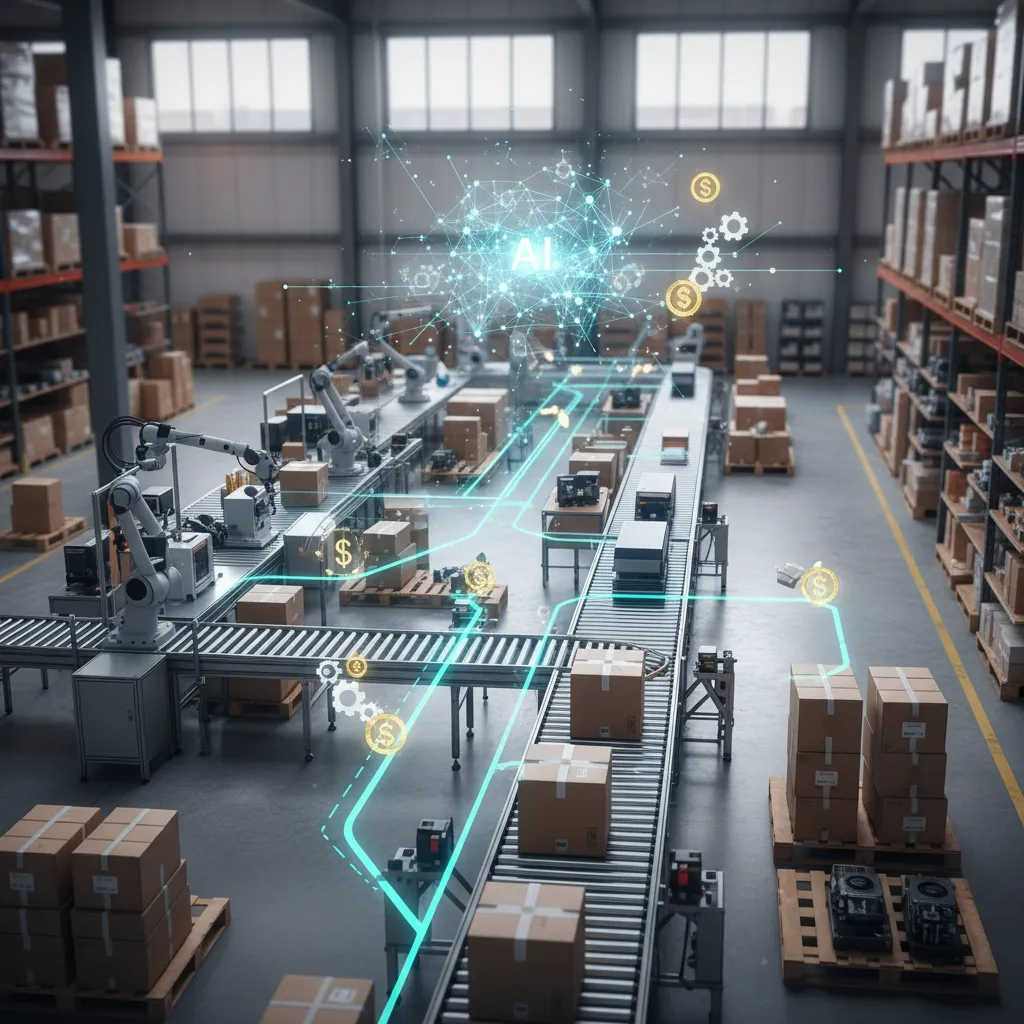
For many businesses, inventory is the largest component of working capital. AI creates a direct link between physical inventory and financial liquidity. By integrating data from IoT sensors, warehouse management systems, and sales platforms, AI can trigger financing events based on inventory movement. For example, a financing facility could release capital to a supplier automatically the moment their goods arrive at the buyer’s warehouse, with no wait for an invoice to be processed. This “just-in-time” financing minimizes capital tied up in goods in transit and aligns funding with the physical supply chain.
Proactive Risk Management: From Rear-View Mirror to Predictive Shield
Risk management is where AI delivers the largest supply chain finance benefits. Traditional methods are reactive and tell you when a supplier has already defaulted. AI for supply chain risk management is proactive and tells you which supplier is likely to default and why, so you have time to act.
Multi-Factor Supplier Risk Scoring
A supplier’s health can’t be judged by its balance sheet alone. AI builds a multi-dimensional risk profile by ingesting and analyzing a wide range of structured and unstructured data:
- Financial Data: Real-time analysis of payments, credit utilization, and public filings.
- Operational Data: On-time delivery rates, quality control metrics, and production capacity reports.
- Alternative Data: Negative news sentiment, social media mentions, labor union disputes, and changes in corporate leadership.
- ESG and Compliance Data: Monitoring for environmental violations, labor issues, or sanctions that could disrupt operations or cause reputational damage.
The result is a live, evolving risk score that gives a far more accurate picture of supplier viability than a static annual review.
Predictive Disruption Modeling
AI supports detailed “what-if” scenario planning. By building a digital twin of your supply chain, you can model the financial impact of various disruptions. A CFO could ask, for instance:
- “What is the working capital impact if a key port in Southeast Asia closes for two weeks?”
- “How would a 20% increase in raw material costs affect the financial stability of our Tier 2 suppliers?”
- “Which suppliers are most vulnerable to a sudden currency devaluation in a specific country?”
These simulations, driven by predictive analytics supply chain finance, let businesses build contingency plans, diversify their supplier base, and position inventory to weather future shocks. This foresight is a cornerstone of building a truly antifragile business.
Real-Time Fraud Detection and Compliance
The complexity of global supply chains creates ample opportunity for fraud. AI algorithms are very good at pattern recognition, which makes them a strong defense:
- Duplicate Invoice Detection: AI can spot subtle similarities in invoices that a human might miss, preventing double payments.
- Phantom Vendor Identification: AI can flag shell companies with no operational history or unusual payment patterns.
- Price and Bid-Rigging Analysis: By analyzing historical procurement data, AI can identify collusive behavior among suppliers.
This continuous, automated vigilance protects the balance sheet and supports operational integrity.
The Core Technologies Powering Intelligent Supply Chain Finance
The “AI” in supply chain finance is an ecosystem of interconnected capabilities working together, and no single technology covers it.
- Machine Learning (ML) & Predictive Analytics: This is the core engine. ML algorithms are trained on historical data to identify patterns and make predictions about future events, from invoice payment dates to supplier default risk. It is the “how” behind every forecast and risk score, and our guide to predictive analytics for business growth explores it further.
- Natural Language Processing (NLP): NLP gives computers the ability to understand human language. In SCF, it is used to extract critical information from unstructured documents like contracts, bills of lading, and news reports, and to convert the text into structured data for analysis.
- Computer Vision: An extension of AI that lets systems “see” and interpret visual information. It powers Optical Character Recognition (OCR), which digitizes paper invoices and shipping documents automatically and with high accuracy.
- Robotic Process Automation (RPA): RPA is not strictly AI, but RPA bots are often directed by AI to execute repetitive, rules-based tasks like data entry, file transfers, and system reconciliations. They act as the “hands” that carry out AI’s decisions.
- Blockchain/Distributed Ledger Technology (DLT): Still emerging, blockchain offers a secure, transparent, and immutable ledger for all transactions. Paired with AI, it can create a trusted, automated environment for multi-party transactions, which reduces disputes and fraud.
Implementing an AI-Powered SCF Strategy: A Practical Roadmap
Moving to an AI-driven SCF model takes a series of strategic steps, and it can’t happen overnight. A phased, methodical approach works best.
Step 1: Build a Foundational Data Strategy AI runs on data. Before anything else, break down data silos between your ERP, procurement, treasury, and logistics systems. Set up strong cloud data governance so the data is clean, accessible, and reliable. “Garbage in, garbage out” applies fully here.
Step 2: Start with a Focused Pilot Program Don’t try to boil the ocean. Begin with a specific, high-impact use case. A good starting point is an AI-powered dynamic discounting program for your top 20% of suppliers. Define clear KPIs: increase in early payment discounts captured, reduction in manual invoice processing time, and improvement in supplier satisfaction.
Step 3: Choose the Right Technology Partner The “build vs. buy” decision matters. For most companies, partnering with a specialized SaaS provider is the most efficient path. When evaluating platforms, look for:
- Proven AI/ML capabilities and transparent models.
- Smooth integration with your existing ERP and financial systems.
- A strong track record in both finance and supply chain logistics.
- Strong security and compliance credentials. A thoughtful SaaS vendor management strategy helps you find a partner that fits your long-term goals.
Step 4: Prioritize Integration and Change Management The best technology is useless if no one uses it. Plan for deep integration with core systems so your finance and procurement teams get a smooth experience. Invest in training so employees can interpret AI-driven insights and trust the system’s recommendations.
Step 5: Scale and Iterate with Strong Governance Once your pilot proves its value, develop a roadmap for scaling the solution across more suppliers, geographies, and use cases. As you scale, put an AI governance framework in place to manage model risk, ensure ethical use of data, and maintain regulatory compliance.
Common Pitfalls to Avoid on the Path to Intelligent SCF
The path to AI-driven transformation has its challenges. Knowing these common mistakes can help you handle them.
- Ignoring Data Quality: Launching an AI initiative with incomplete or inaccurate data is the main reason for failure. A data cleansing and standardization project should come first.
- The “Black Box” Problem: If your team doesn’t understand, at a high level, how the AI models reach their conclusions, they won’t trust them. Demand transparency from your vendors and invest in explainable AI (XAI) features.
- Underestimating Change Management: AI changes workflows and roles. If you don’t explain the “why” behind the change and provide adequate training, expect resistance and low adoption.
- A Sole Focus on Cost-Cutting: AI delivers significant efficiency gains, but its larger value is strategic. Focusing only on automating jobs or cutting costs misses the chance to build resilience, strengthen supplier partnerships, and create a competitive advantage.
The Future of SCF: Intelligent, Autonomous, and Resilient
AI is moving SCF from a back-office financing function to a dynamic, forward-looking source of strategic value. The benefits include a stronger balance sheet, more resilient operations, and deeper, more collaborative supplier relationships.
With an adaptive, resilient, and transparent financial ecosystem built on AI, businesses can do more than survive in a volatile world. They can shape their own course and turn supply chain complexity from a threat into a lasting competitive advantage. The journey starts with a strategic decision: stop simply managing transactions and start building an intelligent value chain for the future.
This article is general information, not financial, investment, tax or legal advice. Your situation is your own, so check with a qualified professional before you act on it. See our disclaimer.